
Fellowship Tracks
Available Tracks
Clinical Fellowship Track
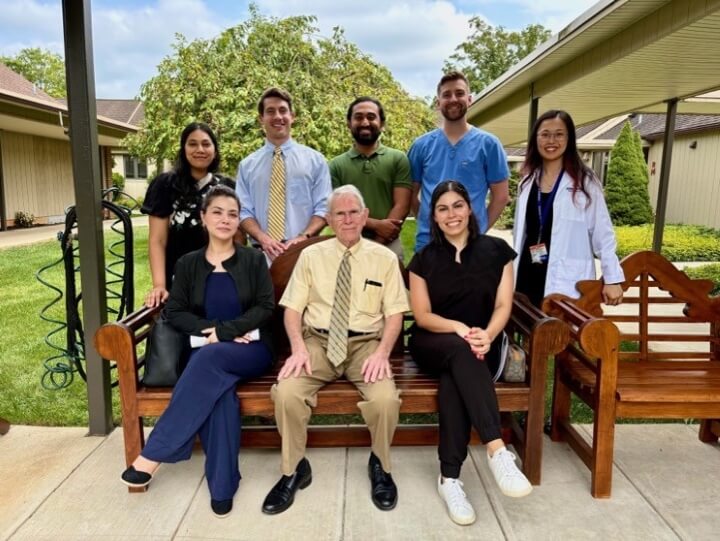
Train to be an expert geriatrician who’s equally comfortable with clinical care in community practice and academic settings with this yearlong, ACGME-accredited track. Get a wide range of experience in clinical programs, including longitudinal experiences in the Beacham Ambulatory Center, the Johns Hopkins Memory Center, and FutureCare Northpoint, which is a community-based long-term care facility. Clinical rotations include everything from inpatient geriatrics consultations to home-based primary care to rehabilitation to geriatric psychiatry and more. You’ll be active in teaching medical students and residents, and also have one month to focus on research, quality improvement, or a clinical elective chosen based on your interests.
The completion of this track fulfills all requirements of the American Board of Internal Medicine (ABIM) and the American Board of Family Practice (ABFP), making you eligible to sit for the examination for geriatric medicine board certification offered by ABIM or the Certificate of Added Qualification in Geriatric Medicine offered by the ABFP.
Clinician Educator Track
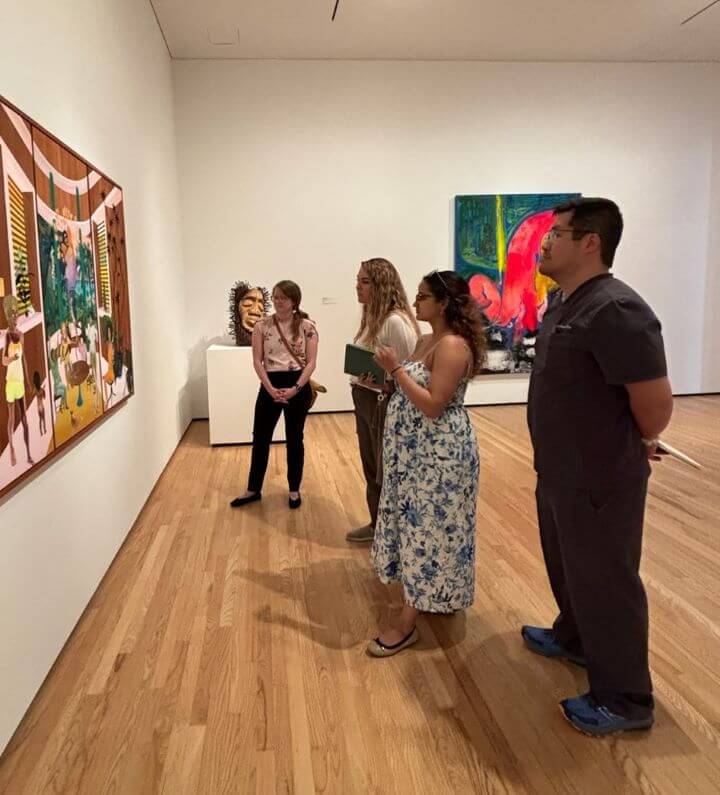
Add to the Clinical Fellowship Track with a year of training that focuses on education, designed to develop a health care workforce that improves health outcomes for older adults by integrating geriatrics into primary care. All required clinical rotations present additional objectives to build your teaching skills, primarily focused on the 4 Ms of age-friendly health care. Your second year of training comprises semester-long courses on curriculum development and teaching skills, opportunities for education of medical students and residents in clinic and inpatient services, mentorship by clinician educators in geriatrics and general internal medicine, and completion of a scholarly project focused on education. You’ll also serve on the Program Educational Committee (PEC) as the fellow representative.
Please note that this track is only available to fellows who are U.S. citizens or permanent residents due to the requirements of the federal funding that supports the fellowship training.
Clinician Leadership Track
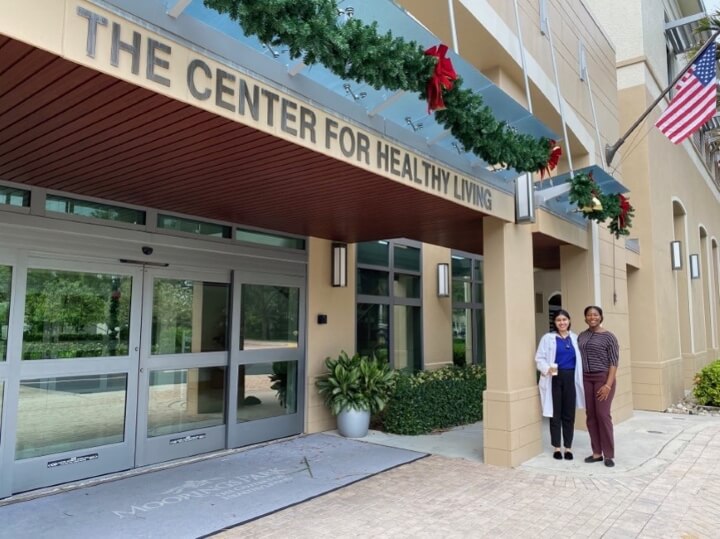
Interested in becoming a certified medical director or health system leader? Spend a year in Baltimore, then six months in Naples, Florida, at the Moorings Park Retirement Community with this 18-month track. After completing the Clinical Fellowship Track, enter a specialized pathway that focuses on preparing you to be a medical director in a variety of health care settings and practices. Care for patients across the care spectrum in a continuing care retirement community while participating in leadership and board meetings to better understand the organization, funding and leadership of a state-of-the-art life care community.
Research Fellowship/Clinician Researcher Track
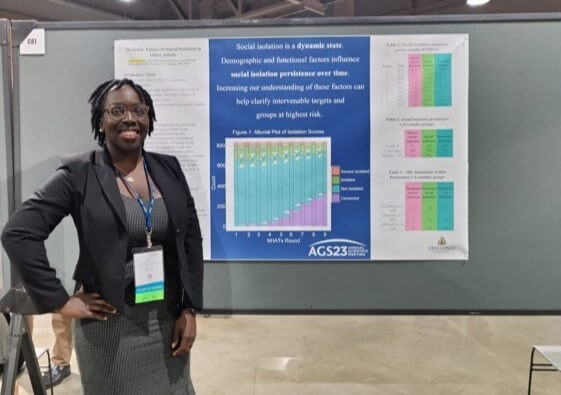
Want to start out as a clinician, then dive into research? This track allows you to add up to two years of T32 research on topics that impact the health of older adults after completing the Clinical Fellowship Track. Focus on developing research skills that will serve you well in a career as a clinician researcher, and work on a variety of projects with faculty across multiple disciplines.
Please note that this track is only available to fellows who are U.S. citizens or permanent residents due to the requirements of the federal funding that supports the T32 fellowship.
Clinical Training
-
The Program of All-Inclusive Care for the Elderly (PACE) is a comprehensive health care model designed to help older adults with complex medical needs continue to live safely and independently in their communities as long as possible. PACE programs integrate preventive, primary, acute and long-term care services under one coordinated plan. Hopkins ElderPlus, Maryland’s original PACE program, is based at Johns Hopkins Bayview Medical Center and provides comprehensive care for older adults through a team-based approach that includes medical and nursing care, rehabilitation therapies, personal care, social work support, medications, nutritious meals and recreational activities. Fellows working with Hopkins ElderPlus are embedded in the interdisciplinary team caring for patients across the spectrum of care.
-
The Johns Hopkins Home-Based Medicine (JHOME) program offers fellows a unique opportunity to engage in comprehensive, patient-centered care for homebound older adults with one of the nation's longest standing house call programs. Fellows conduct home visits and manage patients with complex medical and social needs. Under the supervision of experienced geriatricians, nurse practitioners and social workers, fellows participate in developing personalized care plans, coordinating multidisciplinary services and addressing challenges such as mobility limitations and cognitive impairment. This rotation emphasizes the importance of continuity of care, interdisciplinary collaboration and the social determinants of health, providing invaluable insights into the delivery of primary care beyond traditional clinical settings.
-
The MedStar Center for Successful Aging (CSA) offers fellows an experience in a unique model of value-based primary care. While at the CSA, fellows engage with an interdisciplinary team—including geriatricians, nurse practitioners, pharmacists, social workers and physical therapists—to deliver comprehensive, patient-centered care. The program emphasizes the Age-Friendly Health Systems' 4Ms framework: What Matters, Medication, Mentation and Mobility. Through participation in comprehensive geriatric assessments, medication management, cognitive evaluations and mobility assessments, students gain hands-on experience in developing individualized care plans. Additionally, this rotation provides exposure to addressing social determinants of health, supporting caregiver needs, and coordinating community resources, offering a holistic view of aging and health care delivery.
-
The Inpatient Geriatric Consult Service provides expert geriatric consultative care to patients receiving care on surgical or medical services, including ICU and observation stay units. Consults are typically requested for preoperative consultation and risk management, medical complexity, delirium, polypharmacy, dementia care, falls and transitions of care or goals of care planning. Fellows work with the geriatricians and nurse practitioners on this service, learning to become experts in geriatric consultative care.
-
Fellows gain exposure to acute and subacute rehabilitation through a variety of inpatient and outpatient clinical experiences rotating in the Physical Medicine and Rehabilitation Clinic and learning from physical, occupational and speech therapists. This rotation also allows for exposure to systems of care and other types of rehabilitation, including cardiac and pulmonary rehabilitation, driving evaluation, low vision rehab and subacute rehabilitation at a local skilled nursing facility.
-
Fellows rotate with geriatric psychiatry faculty on the inpatient Geriatric Psychiatry unit on Meyer 6 at Johns Hopkins Hospital in downtown Baltimore, learning about inpatient psychiatric care of older adults. This rotation includes the opportunity to observe and learn about ECT. During this month, fellows also observe and learn from geriatric psychiatrists and neurologists in a variety of outpatient clinics at Johns Hopkins Bayview and Johns Hopkins Hospital (such as general psychiatry, movement disorders and neuropsychology testing).
-
This rotation provides fellows the opportunity to move through a variety of subspecialty clinics related to the subspecialty care of older adults. Opportunities include uro-gynecology, osteoporosis, orthopedics, wound care, endocrinology, transgender care, bladder cancer and NPH clinic.
-
The fellows rotate at the Baltimore VA, learning about the unique models and programs within the VA to care for older veterans. One month is spent rotating with the Palliative Care team, providing palliative care consultation at the Baltimore VA Medical Center as well as at the VA Loch Raven Community Living Center (CLC). Fellows gain experience with inpatient acute hospital consults and an inpatient hospice unit. Fellows also spend a month in a variety of other experiences at the VA, including inpatient consultation, home-based primary care, exercise physiology, mobility and dementia clinics, and an interdisciplinary PACT clinic. These rotations are supervised by University of Maryland and VA geriatrics faculty, providing fellows with an exposure to additional faculty and other models of geriatric care.
-
Fellows spend this time on a research, quality improvement or clinical rotation experience of their choice, based on approval from the program director.
-
Beacham Center for Geriatric Medicine
For their fellowship year, each fellow is paired with a geriatrician and shares their panel of patients, joining the faculty member half a day per week in clinic to provide longitudinal geriatric primary care and consultative care. Patients served at the center are 65+ and come from the neighborhoods by the Bayview campus as well as from longer distances seeking expert geriatric care.
Johns Hopkins Memory and Alzheimer's Treatment Center
Fellows learn to provide expert consultative care for patients living with dementia and their care partners by working closely with geriatricians at this center. Each fellow is paired with a geriatrician and sees patients two half-days per month for the fellowship year.
Fellows see patients longitudinally who live at this community-based long-term care center about 15 minutes from Johns Hopkins Bayview. Fellows each follow a small panel of older adults and learn to provide care for nursing home residents from Drs. Fatima Sheikh and Cecilia Cai, who are both geriatrics fellowship alumni and FutureCare medical directors.
-
Looking for quick links you’ll need as a fellow?
- The Office of Graduate Medical Education has information about everything from the Clinical Fellows Council to our wellness services to contracts and policies for Johns Hopkins fellows.
- The Bayview campus is where you'll spend most of your time, so check out a map, transit information, and more.
- Living in Baltimore has video tours of the city and provides housing resources, among other things. You can also use Live Baltimore’s Find My Perfect Neighborhood tool to set some parameters and explore your options. Choose a neighborhood in Southeast Baltimore if you want a short commute.
- Experience Baltimore shares tips on campus life, public and Hopkins transit options, and fun things to do in and around the city.
Research Programs
-
This fellowship program prepares epidemiologists and biostatisticians for research careers in healthy productive aging and the prevention and interventions that will accomplish this goal. Several doctoral and postdoctoral fellows are accepted to the program each year and receive training in the methodology and conduct of significant clinical- and population-based research in older adults.
-
This T32 is meant for postdoctoral fellows who have either an M.D. or a Ph.D., and U.S. citizenship or a green card. You should be interested in receiving training for clinical, biologic and engineering topics related to aging to apply because this program's long-term goal is to develop and train a cadre of highly skilled scientists who work across disciplines to connect emerging basic aging biological knowledge to meaningful clinical applications and engineered solutions for older adults. Trainees will also become the next generation of academic program leaders and mentors.
This expertise is developed through a series of classroom and experiential learning opportunities leveraged from our outstanding aging-focused research programs, including the Biology of Healthy Aging Program, the Johns Hopkins Older Americans Independence Center, and the Center on Aging and Health. Many other allied research programs and faculty mentors collaborate extensively with the core group of investigators and provide laboratory and clinical translational-based training activities. The scientific leadership, infrastructure, collaborative nature and collegial environment provided by these programs and affiliated faculty and trainees enable all trainees to receive broad training experience that includes the tenets of basic aging biology and related bench research, and the major tenets of clinical investigation and clinical research protocol development related to older adults.
For additional information, please contact Brandon LaCour, program coordinator, at [email protected] or 410-550-7162.
-
The goal of the T32 program is to produce the next generation of researchers with rigorous training in person and family-centered health services and outcomes research, all applied to geriatrics and gerontology. This program is conducted jointly by health services researchers, gerontologic nursing researchers and geriatricians with a strong commitment to bringing together students and fellows in all these disciplines.
This program capitalizes on the rich resources for health services, gerontology, nursing and geriatric research at the Johns Hopkins Bloomberg School of Public Health, Johns Hopkins School of Medicine, Johns Hopkins School of Nursing, and the university. Pre- and postdoctoral trainees will obtain the skills and experiences needed to lead multidisciplinary collaborative research teams. Predoctoral trainees undertake a rigorous program of coursework in the core domains of public health and gerontology including epidemiology, biostatistics, health services, health policy and research ethics. In close consultation with their training program advisor team, postdoctoral trainees complete core training grant curriculum courses and additional courses required to complement their prior academic experience. All trainees participate in a yearlong practicum experience, a biweekly seminar, ongoing mentored research projects and yearly integrative activities to complement their didactic curriculum. These components provide a solid foundation in health services and outcomes research while offering the opportunity to pursue specialized training in areas of interest.
The T32 postdoctoral fellowship can be paired with a clinical geriatrics training year for a total of three years. Geriatric fellowship applicants can be simultaneously considered for a T32 appointment in conjunction with a clinical year and are encouraged to reach out to the program director to express interest. These trainees are supported by an experienced group of 22 core faculty and 31 affiliate faculty with expertise in one or more fields related to aging research. Co-directors Dr. Cynthia Boyd and Dr. Jennifer Wolff are accomplished scholars and national leaders in their research fields and can be emailed for more information on applying.
-
Frailty is recognized as an age-related condition in which older adults lose the capacity to cope with stressors and become vulnerable to functional decline, loss of independence and mortality. Since its original funding in 2003, the novel approaches of the Johns Hopkins University Claude D. Pepper Older Americans Independence Center have helped to demonstrate that frailty is a syndrome caused by multiple biological mechanisms that are expressed through characteristics of decreased resiliency and reserve in older adults. Frailty research provides a highly productive framework for clinical, population-based and biological discovery and for the development of junior investigators for academic careers in frailty and aging research.
-
Among older adults, 48% have three or more chronic conditions, and the number of older adults with multiple chronic conditions will continue to increase dramatically. The presence of multiple chronic conditions independently predicts adverse outcomes, including quality of life, mortality, disability and complications of treatment beyond the effects of the individual conditions. Currently, there is a significant gap in our understanding of how best to provide care for patients with multiple chronic conditions, which this research aims to address.
-
For aging populations in the United States and abroad, dementia is a major clinical and public health issue; it is a lengthy and costly condition that creates a large social and financial burden on society. Unless new discoveries are made in the prevention or treatment of dementia, specifically Alzheimer's disease, an estimated 13.2 million Americans will have dementia by 2050. This research is critical to identifying new and effective approaches to early detection of dementia.
-
Studies within this group range from molecular and cellular to genetic and laboratory animal-based approaches targeted to understanding the mechanisms, risk factors and pathophysiology of aging-related changes in health, function and quality of life.
